House Rules
Unspoken rules of Toronto tennis courts
A field guide to the queue, the phantom racquet, and the 30-minute clock. Get the lines moving faster.
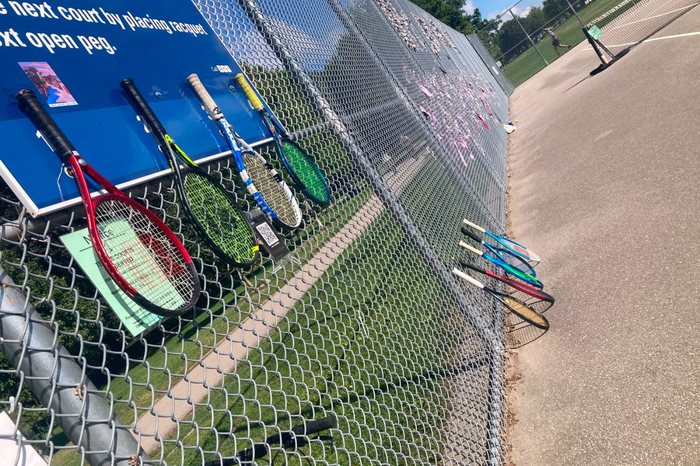
You plan to play on a sunny weekend, head to your local public court, and spot ten racquets in the queue. You estimate 90 minutes, grab a coffee nearby, and return 40 minutes later, only to find your racquet was bypassed, or the line didn't move at all. Now you're starting over.
If this sounds familiar, you are not alone. Navigating Toronto's public court queueing system takes a bit of local know-how. Here's how to keep things smooth, fair and hassle-free.
Know your board
Every entry point features a board designated for 2, 3, or 4 specific courts. The queue applies only to those designated courts. If the board slots are full, place your racquet securely in the fence weave, or on the ground directly below it, in sequence.
Watch for phantom racquets
Popular spots like Trinity Bellwoods often see long queues padded with multiple racquets placed by a single group, or by players already on court. If a court opens and nobody claims the lead racquet politely call out to the crowd. If it stays unclaimed, move to the next racquet in line. Keep jumping till you find someone actually waiting to play.
Track the time
Rotations typically run on 30-minute cycles when people are waiting. If a group has been playing well past 30 minutes, politely ask how much time they have for their game to be completed.
Etiquette first
Never walk onto or behind a court during an active rally; wait for the point to conclude before crossing. Stay patient, stay alert, and keep the tone friendly, queue shifts often happen faster than expected when groups pack up early.